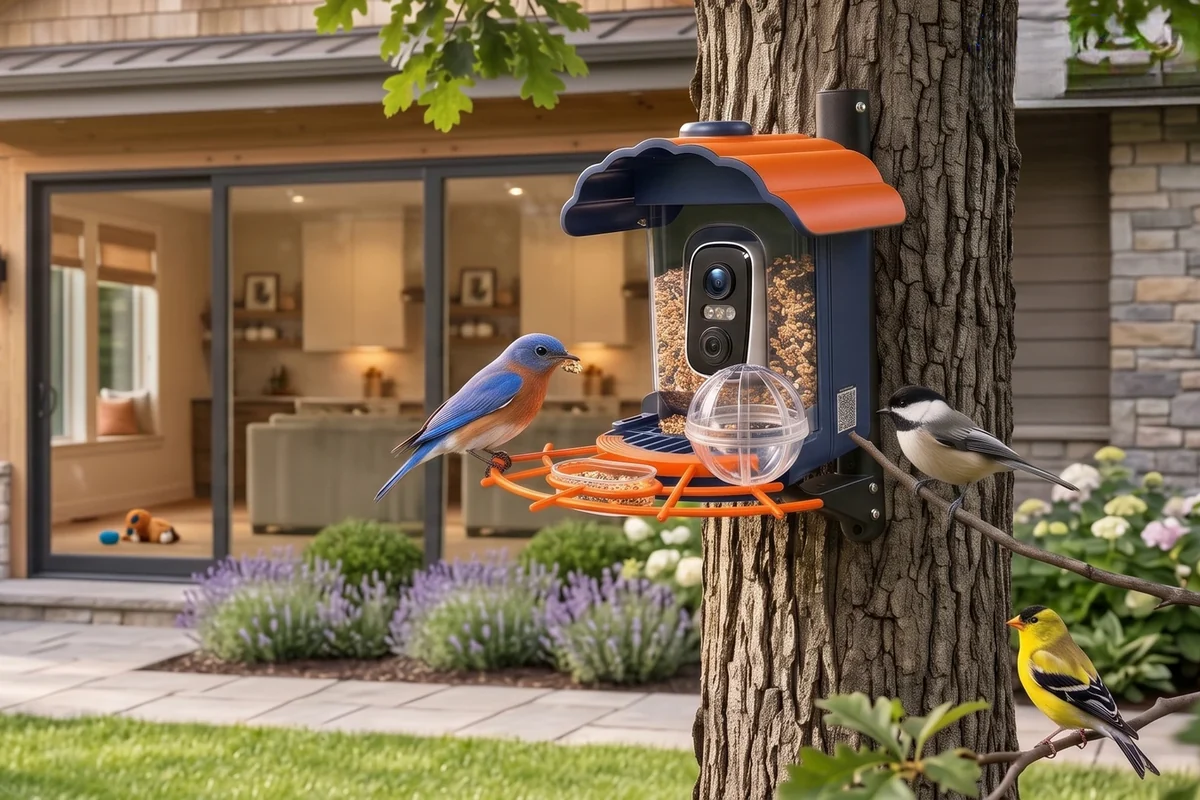
A cleaner backyard feeder starts with a small fill, frequent checks, and a way to remove food-contact parts without washing the camera. Rain, spilled seed, and debris can turn a promising viewing spot into a maintenance problem. Set up a routine you can repeat before the feeder becomes difficult to clean.
Check food condition before adding more
Look at the tray and the ground below it. Remove wet or spoiled seed and accumulated waste rather than covering it with a fresh layer. Note which seed remains uneaten so you can make a smaller fill next time.
Clean the removable parts thoroughly
The Cornell Lab of Ornithology recommends cleaning seed feeders about every two weeks, and more often in wet weather, during heavy use, or when disease is a concern. Its feeder cleaning guide describes scrubbing away old food, disinfecting with an appropriate diluted bleach solution, rinsing thoroughly, and drying before refilling. If using bleach, follow its label, check material compatibility, and never mix it with other cleaning products.
Follow the device manual to separate washable trays and containers from the camera, battery, connectors, and other electronics. A weather-resistance rating does not by itself mean a powered device can be immersed or pressure-washed. Only use a dishwasher for parts the manufacturer explicitly identifies as dishwasher safe.
Reassemble, inspect, and refill modestly
Before replacing food, check that parts are fully dry, the tray sits correctly, the outlet is clear, and the mounting hardware is secure. Check the camera view after reassembly: a moved perch or accessory can partly block the image even when the feeder looks normal from the ground.
Keep a brief maintenance note with the date, weather, seed type, and any parts that needed extra attention. If you see sick birds, pause feeding and seek current guidance from a local wildlife organization.
Next, read our backyard bird seed guide and camera bird feeder setup checklist. When comparing bird feeders, consider how easily you can remove and clean their food-contact parts.